Sig Fig Rules for Multiplication and Division
Here's the deal with multiplying sig figs: it's actually simpler than addition once you get it. The rule is straightforward, but students mix it up with the addition rule all the time. Let me show you exactly how it works—and why it makes sense.
The Core Rule: Count Significant Figures
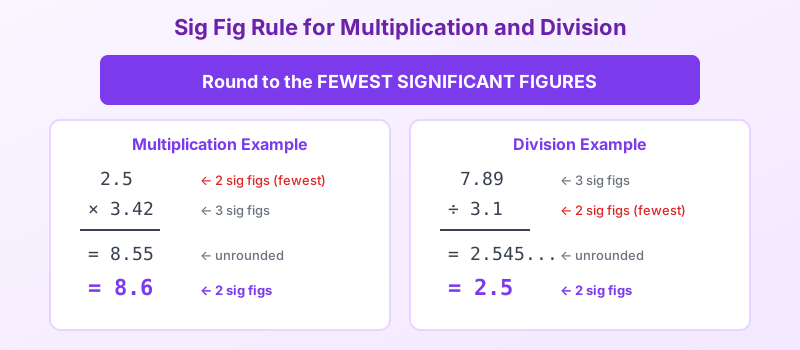
When multiplying or dividing, your answer can only have as many significant figures as the number with the fewest sig figs.
This is different from addition/subtraction, which uses decimal places. For multiplication and division, count sig figs instead.
Why This Rule Makes Sense
Your answer can't be more precise than your least precise measurement. If you multiply a rough estimate (2 sig figs) by a precise measurement (5 sig figs), your answer is only as good as the rough estimate.
2.5 × 3.42 = 8.55
→ 8.6 (2 sig figs - matches 2.5)
The 3-Step Process
Count sig figs in each number
Identify how many significant figures each number has
Do the calculation
Multiply or divide normally, keeping all digits
2.5 × 3.42 = 8.55
Round to the fewest sig figs
Round your answer to match the number with fewest sig figs
8.55 → 8.6
✓ Rounded to 2 sig figs (matching 2.5)
Common Mistakes to Avoid
- Using decimal places instead of sig fig count
- Counting leading zeros as significant
- Forgetting that exact numbers have infinite sig figs
Mixed Operations
When you have both multiplication/division AND addition/subtraction, follow order of operations. Apply the appropriate rule at each step.
Related Guides
Decimal Places vs Significant Figures
Why multiplication uses sig figs
Exact Numbers and Sig Figs
Know which multipliers should not limit the answer
Significant Figures Worksheet
Practice multiplication, division, and mixed problems
Addition & Subtraction Rules
Use decimal places for +/-
Complete Sig Fig Rules
All 5 counting rules
Rounding Sig Figs
How to round correctly
Practice Problems
48 interactive problems