Sig Fig Practice Problems with Answers
Master significant figures with 48 free sig fig practice problems. This interactive sig fig practice quiz covers counting, rounding, and calculation rules with instant feedback—perfect for chemistry sig fig practice.
How Many Sig Figs? Counting Practice Problems
How many sig figs in 100?
How many sig figs in 100.?
How many sig figs in 0.020?
How many sig figs in 100.0?
How many sig figs in 3.0?
How many sig figs in 0.00520?
How many sig figs in 5.00?
How many sig figs in 1000?
How many sig figs in 0.01?
How many sig figs in 4.50×10³?
How many sig figs in 2.0?
How many sig figs in 10.0?
How many sig figs in 0.0030?
How many sig figs in 1.005?
How many sig figs in 200.?
How many sig figs in 6.022×10²³?
How many sig figs in 0.100?
How many sig figs in 50?
Understanding Significant Figures in Chemistry
Significant figures (sig figs) indicate measurement precision in science. When you measure 2.50 cm, the trailing zero tells us you measured to the hundredths place—more precise than just 2.5 cm. This sig fig practice page helps you master these essential concepts through interactive problems.
The Five Counting Rules for Sig Fig Practice
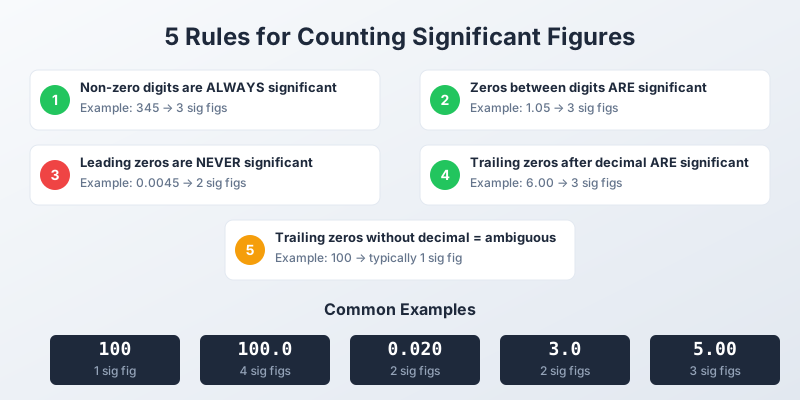
- Non-zero digits always count (345 = 3 SF)
- Zeros between digits count (1.05 = 3 SF)
- Leading zeros never count (0.0045 = 2 SF)
- Trailing zeros after decimal count (6.00 = 3 SF)
- Trailing zeros without decimal are ambiguous (100 = 1 SF typically)
Sig Fig Rules for Addition, Subtraction, Multiplication, and Division
The sig fig rule for addition and subtraction requires rounding to the fewest decimal places among all values. For example, when adding 12.11 + 18.0, the answer is 30.1 because 18.0 limits us to one decimal place.
For multiplication and division, round to the fewest significant figures. When calculating 2.5 × 3.42, the result is 8.6 (not 8.55) because 2.5 has only 2 sig figs. These chemistry sig fig practice problems help reinforce both rules.
Tips for Multi-Step Sig Fig Practice Problems
When solving multi-step sig fig practice problems, keep all digits during intermediate calculations and only round your final answer. This prevents rounding errors from accumulating. For combined operations (like adding then multiplying), apply the appropriate rule at each step but delay rounding until the end.
Frequently Asked Questions About Sig Fig Practice
How many sig figs in 100?
100 has 1 significant figure. Trailing zeros without a decimal point are not significant. To express 3 sig figs, write "100." with a decimal point.
How many sig figs in 0.020?
0.020 has 2 significant figures. Leading zeros (0.0) are placeholders and don't count, but the trailing zero after 2 is significant.
What's the sig fig rule for addition and subtraction?
For adding and subtracting sig figs, round your answer to the fewest decimal places. Example: 12.11 + 18.0 = 30.1 (not 30.11) because 18.0 has only 1 decimal place.
What's the sig fig rule for multiplication and division?
Round to the fewest sig figs in any factor. Example: 2.5 × 3.42 = 8.6 (not 8.55) because 2.5 has only 2 sig figs.
Where can I find a sig fig practice worksheet?
Use this page for interactive practice with instant feedback. If you need a printable version, open the significant figures worksheet with answers for a 30-problem sheet and answer key.
Is this a sig fig practice quiz I can use for chemistry?
Yes! These chemistry sig fig practice problems cover all essential topics: counting significant figures, rounding rules, and calculation rules for both addition/subtraction and multiplication/division.
How do I solve multi-step sig fig practice problems?
For multi-step calculations, keep extra digits in intermediate steps and only round your final answer. Apply addition/subtraction rules (decimal places) or multiplication/division rules (sig figs) based on the operation.
What are sig fig practice problems with answers?
Sig fig practice problems with answers are exercises where you determine significant figures or perform calculations, then check against provided solutions. This page offers 48 such problems with instant answer checking.